
Getting Up at Night to Urinate: Common Reasons and When to See a Doctor
Waking up to use the bathroom is one of the most common complaints of men over 50. The prostate is only one of several reasons, and the fix depends on which one is yours.
The PSA blood test is one of the most debated tests in men's health. What it measures, why a high number doesn't automatically mean cancer, and how to make the decision with your doctor.
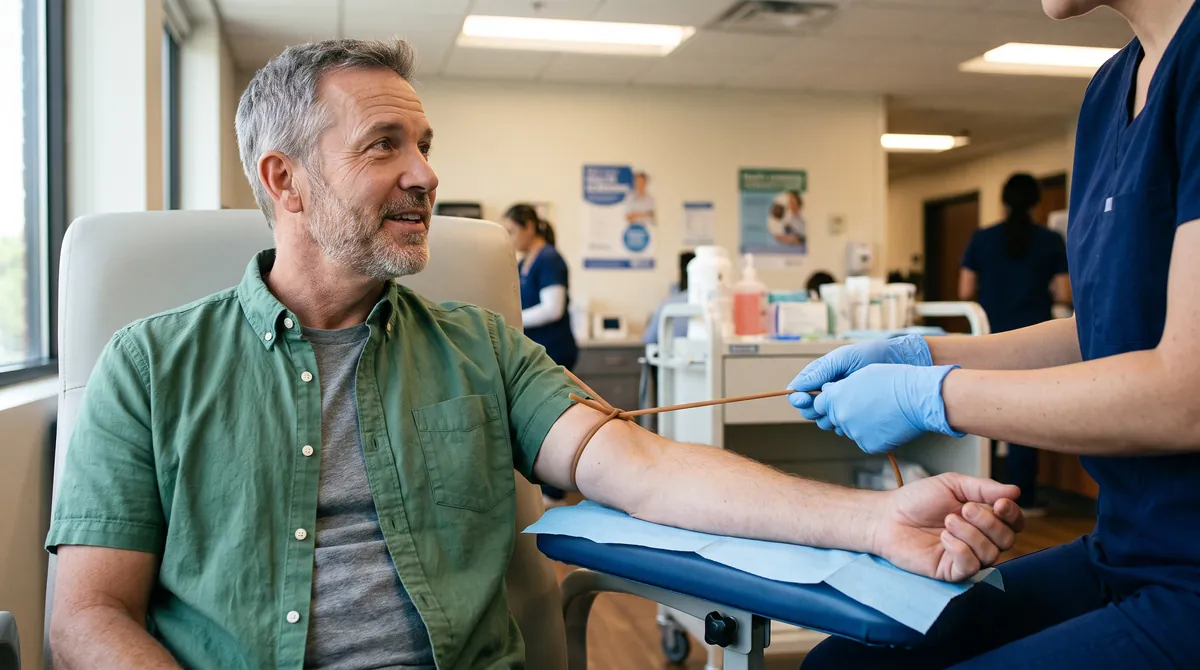
Few tests cause as much confusion as the PSA. Some men have it every year without knowing it was ordered. Others have been told it's unreliable and never had it. The truth sits in the middle: it's a useful test with real limits, and the right choice depends on you.
PSA stands for prostate-specific antigen, a protein made by cells in the prostate gland. Small amounts normally leak into the blood. The test is an ordinary blood draw that measures how much is there, in nanograms per millilitre (ng/mL).
The key thing to understand: PSA is specific to the prostate, not to cancer. Anything that makes the prostate bigger, busier or irritated can push the number up.
According to the National Cancer Institute, PSA levels can rise because of:
Some medicines can also lower PSA, which matters when reading results. Tell your doctor everything you take.
Not a single one. For years, 4.0 ng/mL was used as a rough cut-off, but men can have prostate cancer below it and no cancer well above it. Doctors now look at the whole picture: your age, how the number changes over time, the size of your prostate, your family history and other tests. A single reading is a starting point for a conversation, not a verdict.
The U.S. Preventive Services Task Force (USPSTF), an independent panel that reviews screening evidence, published its current prostate recommendation in 2018:
| Age | USPSTF position |
|---|---|
| 55 to 69 | An individual decision. Talk with your doctor about the possible benefits and harms, then decide based on your values. |
| 70 and over | Recommends against routine PSA screening. |
Other organisations, including the American Cancer Society, suggest starting that conversation earlier, around 45, for men at higher risk: Black men and men whose father or brother was diagnosed with prostate cancer at a younger age. Guidelines are periodically reviewed, so ask your doctor what currently applies to you.
The possible benefit: finding an aggressive cancer early, when there are more options.
The possible downsides: false alarms that lead to worry and more testing, including biopsies, which carry their own risks; and finding slow-growing cancers that might never have caused a problem in your lifetime, sometimes leading to treatment you didn't need. Today, many low-risk cancers are watched closely rather than treated right away, which has reduced that second risk.
Make it part of a bigger checkup. The PSA conversation is one item on a longer list of screenings worth discussing after 50. See The Checkups Men Over 50 Should Ask About.
One page to take to your next appointment: the screenings, numbers and questions worth raising after 50, with space to write your results. Made to print.
We'll email you a link to confirm your address; confirming opens the download. You'll also get our occasional newsletter on strength, sleep and men's health. Unsubscribe anytime. We never sell your email address. See our Privacy Policy.
Check your inbox. We sent a message to confirm your address. Click the button in it and the checklist opens right away. Not there in a few minutes? Look in your spam or promotions folder.
Waking up to use the bathroom is one of the most common complaints of men over 50. The prostate is only one of several reasons, and the fix depends on which one is yours.

A walnut-sized gland most men ignore until it gets their attention. What it is, why it changes with age, and which changes are common versus worth a call to your doctor.

Most men see a doctor when something hurts. A short list of the screenings, numbers and questions worth raising after 50, based on U.S. Preventive Services Task Force recommendations.